Livelihood Development Through Backyard Poultry Farming
The story of Mrs. Baglari, a rural farm woman from Udalguri
Background
Mrs. Baglari comes from a very poor family in Udalguri district. Since 2004, she had reared a few local chickens and ducks in the traditional way and worked as a wage labourer, but this was never enough to support her family. She chose livestock and poultry farming as her path to livelihood security and out of poverty.
Resources Possessed
KVK Intervention
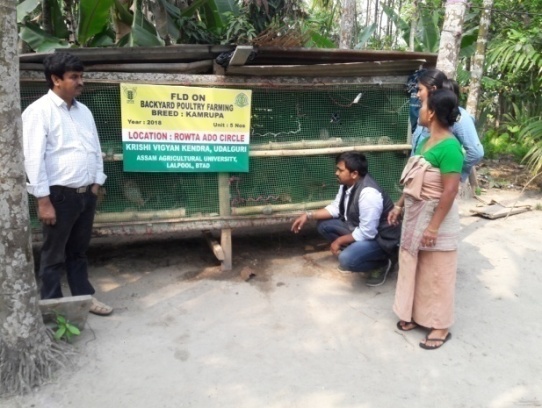
Her turning point came in 2018, when she came in contact with Krishi Vigyan Kendra (KVK), Udalguri and showed keen interest in poultry farming. Under the Tribal Sub-Plan programme, she took part in several trainings and demonstrations on Khaki Campbell duck, Kamrupa chicken and quail.
- 2004Began rearing local chicken and ducks in the traditional way
- 2018Linked with KVK Udalguri; trained under the Tribal Sub-Plan programme
- Khaki Campbell Duck40 ducklings given to her SHG, 4 per member; first introduction of the breed in her village
- Quail and KamrupaTook up quail farming and improved Kamrupa chicken alongside local birds
- TodayExpanded into layer poultry and piggery
Technology Adoption and Growth
Mrs. Baglari multiplied her flock remarkably through natural brooding with local hens. Her 4 Khaki Campbell ducks grew to 56 within two years, a fourteen-fold increase, while she continued to sell ducklings and eggs. She raised her quail from 10 to 30 birds in the same way. Instead of selling chicken eggs, she hatches them naturally, rears the chicks for up to three months and sells them for meat.
Khaki Campbell Duck
Quail
Economic Impact
Mrs. Baglari now earns about Rs 1,17,000 a year from poultry, close to Rs 9,800 a month. Sale of duck hatching eggs brings in Rs 5,100 a month, grower chicken sold at Rs 340 per kg (wholesale) Rs 2,100, day-old ducklings at Rs 45 each Rs 2,000, and quail eggs at Rs 3 each Rs 600. Piggery adds Rs 92,000 a year from piglets and Rs 64,000 from castrated males.
Factors Behind Her Success
- Training and demonstrations from KVK Udalguri under the Tribal Sub-Plan
- Regular field visits and guidance from KVK and the Department of Animal Husbandry and Veterinary
- Market linkage support from KVK for eggs and meat
- Her eagerness to keep learning and her courage to take risks
Spreading the Technology
Mrs. Baglari has become a role model, especially for women in her own and nearby villages. Together with KVK Udalguri, she has helped train more than 50 farm women. She supplies ducklings and chicks to three neighbouring villages and hatching eggs to Mr. Cias Damari of Dogormokha village, Udalguri. Through her, the technology has spread to 140 fellow farmers in the district.
Awards and Recognition
Conclusion
Mrs. Baglari now leads her family’s livelihood and is a role model for her village and the district. She is now taking up mushroom cultivation and expanding piggery to raise her income further. Her journey shows how timely technical support from KVK, combined with hard work and a willingness to learn, can lift a rural woman and her family out of poverty.